How to Get Someones Instagram Deleted: The Four Official Routes
There is no single switch for how to get someones Instagram deleted. You cannot remove another person's account, post or photo yourself; you report a genuine Community Guidelines or legal breach through Instagram's official channels, and a reviewer decides. Four removal jobs exist, and each has its own door.
Type the phrase into a search box and the autocomplete spills a hundred near-versions: how to get someone elses Instagram deleted, how to make someones Instagram account get deleted, even how to get someones instagram post deleted on its own. The spelling drifts; the reality holds firm. You flag a rule-breaker, and Instagram, not you, decides what disappears. The catch most people miss is that "delete" hides four separate tasks behind one word, and picking the wrong door is why so many reports go nowhere.
Why can't you just delete another person's Instagram?
Because the access simply does not exist, and anyone selling it is lying. Deleting a profile lives in that account's own Settings, gated behind its password; only the owner can pull that lever. What an outsider can trigger is enforcement: Instagram either takes down a specific piece of content or disables a whole account, and it does so only after a report shows a real breach. Those are two different actions with two different bars. A clever caption, an unflattering photo, a grudge, none of these qualify. Meta documents removing violating content and disabling accounts as distinct steps on its enforcement ladder. Knowing which one your situation needs, before you touch a form, is half the battle won.
What are the four removal jobs hiding behind "delete"?
Sort your goal into one of four buckets and the right route falls out almost on its own. The four jobs are: take down a whole account, remove a single post, pull a photo of or by you, and free up a squatted username. Each travels a different channel, and a few channels only accept a filing from one specific person. The table below maps the common case to its official route and to who is allowed to lodge it, so you skip straight to the section that fits. For the full menu of breaches we handle, see the solutions hub.
| Removal job | Official route | Who can file |
|---|---|---|
| A whole account: scam, fake shop, repeat abuse | In-app Report on the profile, then name the violation | Anyone who sees it |
| A cloned or impersonating profile | The dedicated impersonation form (may need photo ID) | Only the impersonated person or their rep |
| One post, reel, comment or Story | The three-dots menu on the item, then Report | Anyone who sees it |
| A photo of you shared without consent | Privacy report for an image of yourself | The person pictured |
| Your own copyrighted photo or video | The copyright (DMCA) report form | The rights owner only |
| An intimate image of you | StopNCII.org hash-match plus an in-app report | The person in the image (Take It Down if under 18) |
| A username squatting on your brand | Trademark or impersonation report | The brand or person affected |
How do you get a whole Instagram account removed?
Report the profile and name the precise rule it breaks; the policy you cite does the heavy lifting, not the act of reporting. Open the account, tap the three dots, choose Report, and select the violation that genuinely applies: a financial scam, a counterfeit storefront, a clone, or sustained harassment. Impersonation is special, with its own form that only the impersonated person or their representative may file, often with a photo of government ID. Fraud dominates the queue: of the roughly $2.1 billion Americans reported losing to social-media scams in 2025, about $1.1 billion came from investment cons alone, per the FTC, which is why fake crypto and giveaway profiles get pulled so routinely. A full disable usually follows Meta's strike ladder or one grave breach, the same engine behind getting an account banned.
What happens after you report, and how long does it take?
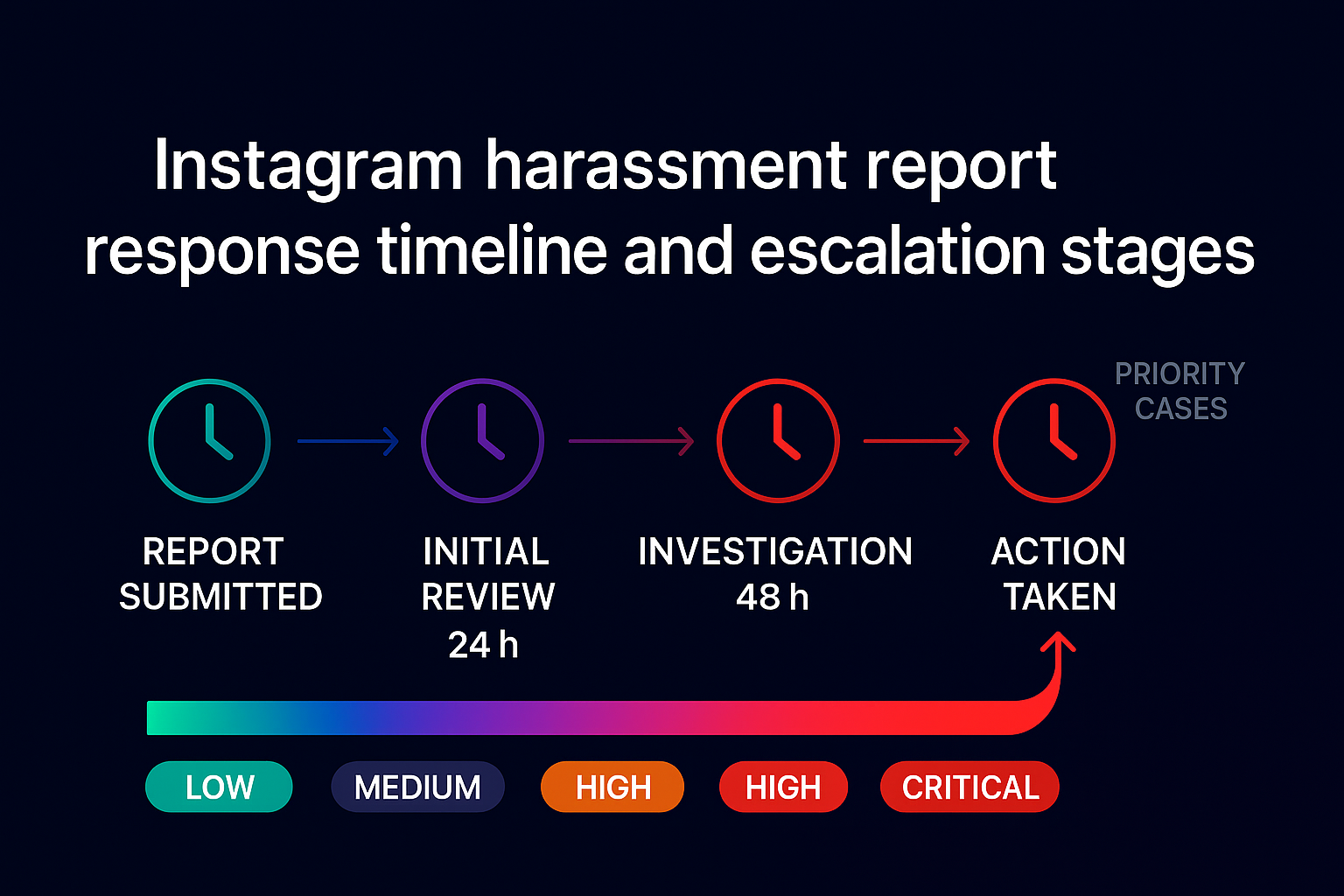
Your report joins a review queue, where either an automated system or a human checks the flagged item against the exact policy you named and returns a decision. You are not left guessing about the outcome: open the app and go to Settings, then Help or Support, then Support Requests, and the Reports tab shows the status of everything you have flagged. Timing depends entirely on what you reported. An intimate-image hash-match or a severe, well-evidenced post can be actioned within hours, because those are treated as emergencies. Disabling a whole account is slower and rarely instant; it usually rides Meta's strike ladder, where repeated breaches accumulate until the account crosses the line, so plan in days rather than minutes. A single grave violation, like a credible threat or child-safety breach, can collapse that timeline. What never speeds it up is reporting more often, which the next sections explain.
How do you get someones Instagram post deleted on its own?
Target the single item, not the profile behind it. You rarely need a whole account gone to kill one harmful photo, reel or comment, and reporting that lone post is both faster and far likelier to stick. Tap the three dots above it, choose Report, then pick the reason that names what is actually wrong. From there the call belongs to Instagram, and it turns entirely on whether a rule was broken. The Help Center is blunt about the part people misread: "The number of times something is reported doesn't determine whether or not it's removed." A merely embarrassing or annoying post survives, because bad taste is not a violation. A post that harasses, doxxes, pushes a con or lifts your copyrighted image is the version that comes down.
How do you get an account removed for harassment or doxxing?
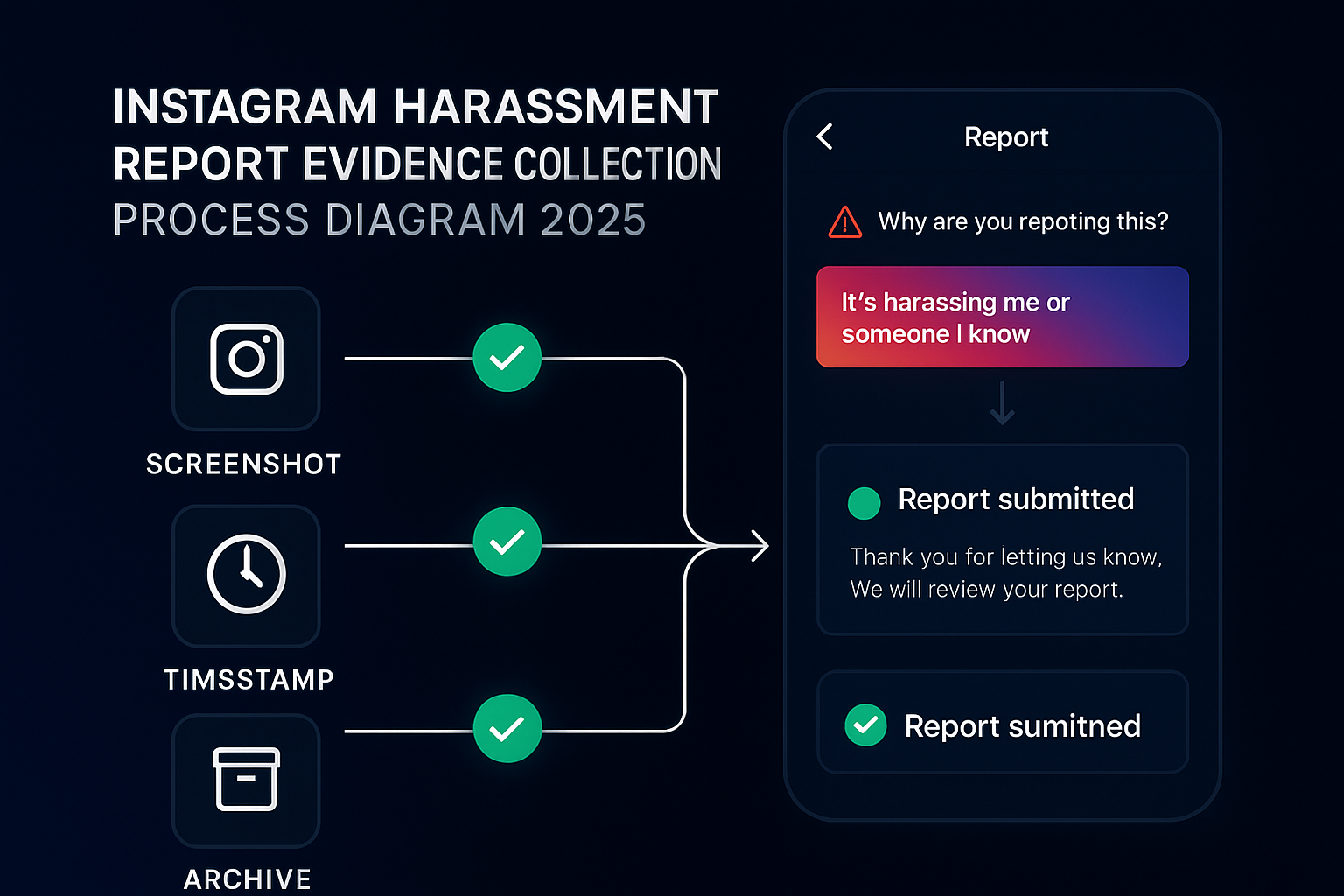
Report the harassment or bullying directly, then build an evidence pack before anything gets deleted in the heat of the moment. On the offending profile or post, tap the three dots, choose Report, and pick bullying or harassment; if the person is publishing your home address, phone number or other private details, that is doxxing, and Instagram treats sharing someone's private information as its own distinct violation you should name explicitly. The pack is what wins these cases: screenshot every message and post with the date and username visible, and crucially do not delete the harasser's messages first, because those threads are your proof. This route is enforced at volume, not just on paper: Meta's Community Standards Enforcement Report shows Instagram actioned roughly 1.5 million pieces of bullying-and-harassment content in Q4 2024, per the Meta Transparency Center. If threats are credible or ongoing, involve the police in parallel.
What tools contain the harm while you wait?
You do not have to sit helpless while a report is pending, because Instagram ships several controls that cut the contact off immediately without needing anything removed. If the problem is being tagged, "Remove Me From Post" detaches your account, and your tag and mention settings can limit who is allowed to tag you at all. Restrict is the quiet option: it hides a person's comments from everyone but them and routes their messages to a request folder, all without notifying them, so a low-grade pest is silenced with no confrontation. Block is the harder cut, severing their ability to find, message or view your profile outright. And switching your account to private walls everything behind approved followers, which strips a stranger's access at a stroke. None of these delete the other account, but each one buys you relief and safety while the formal report works through the queue.
What if Instagram refuses, or the wrong account gets removed?
A denied report is not the end of the line, and a wrongly disabled account is recoverable, so do not panic if the first decision goes the wrong way. When Instagram declines to act on something you flagged, many decisions now offer a "Request a review" option that sends the case back for a second look, and content calls can be escalated further to the independent Meta Oversight Board. The mirror situation matters just as much: if your own account, or the genuine account you were trying to protect, gets caught and disabled, Instagram generally gives a 30-day appeal window to request a review and prove the account is legitimate, often by confirming identity. Act inside that window, because letting it lapse makes recovery far harder. This appeal machinery is exactly why honest, evidence-led reporting is safer than gaming the system: a clean record survives review, while a brigaded or false report rarely does.
How do you get a photo of you taken down on Instagram?
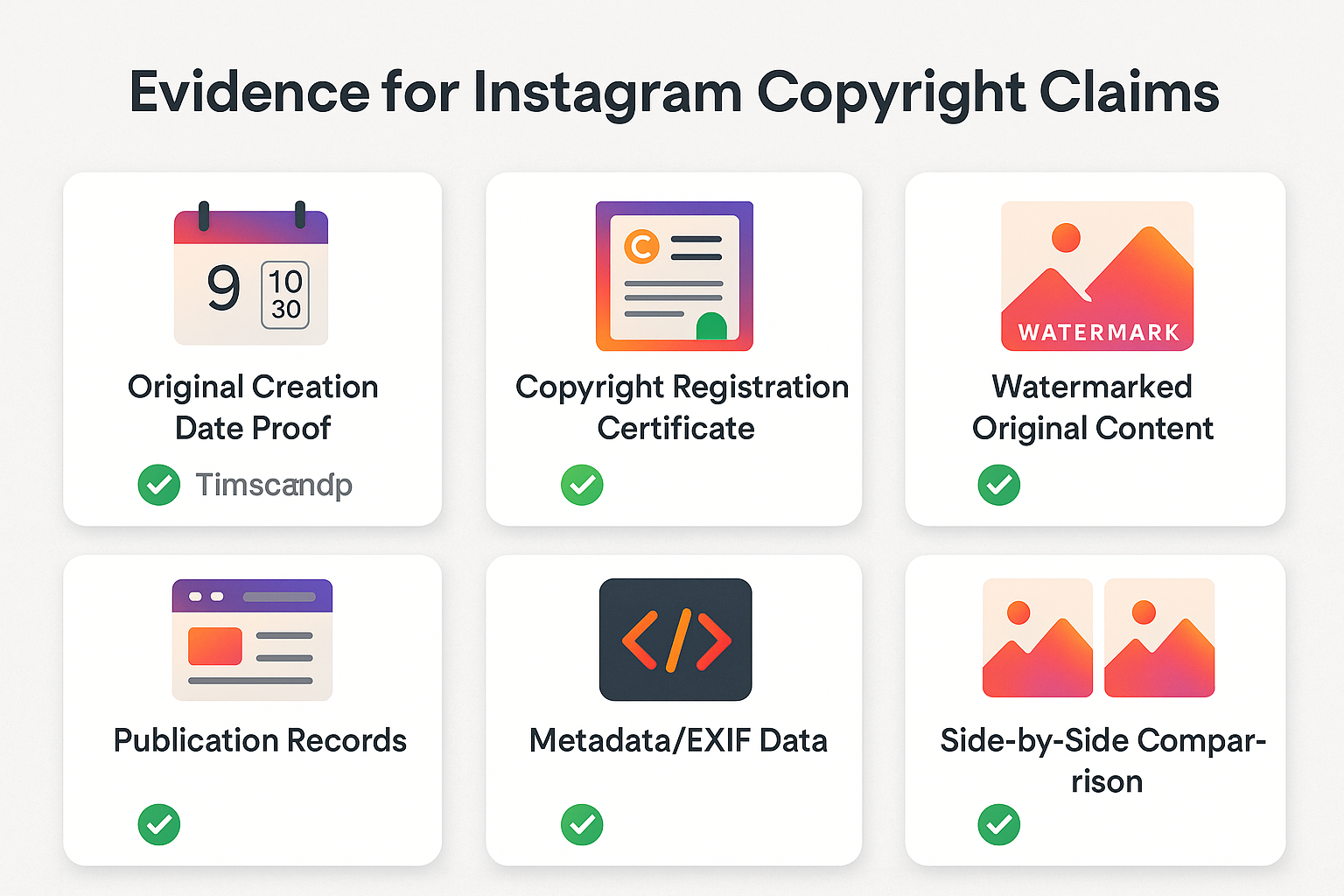
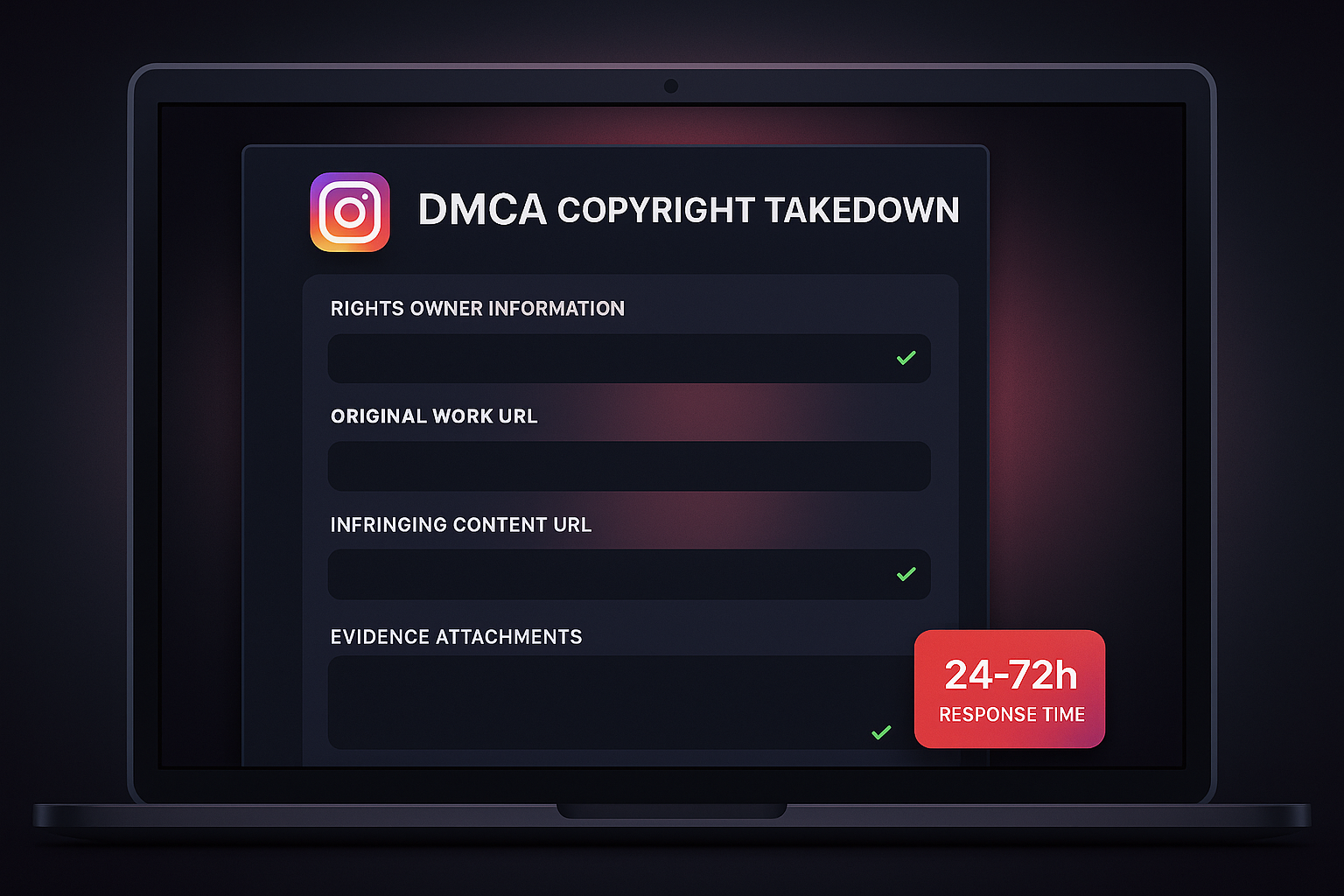
Pick the route that matches your stake in the image, because a picture of or by you carries rights a stranger's content lacks. Here is the trap most people fall into: being in a photo does not give you copyright over it. The person who pressed the shutter owns the rights, so if you did not take the picture, the copyright form is the wrong door and you need the privacy route instead. If you did press the shutter, you own the copyright, and Instagram's copyright report form removes infringing reposts once you file as the owner. One warning before you do: that report is not anonymous. Instagram forwards your name, email and complaint to whoever posted it, so it suits a photographer or brand more than someone needing to stay hidden. If the issue is privacy rather than ownership, a candid shot of you posted without consent, use Instagram's separate privacy report for images of yourself. And if you are merely tagged in something unwanted, "Remove Me From Post" detaches your account with no formal complaint at all.
How do you remove an intimate image fast?
This is the one scenario where "fast" is honest, because platforms treat non-consensual intimate images as an emergency, not a ticket in a queue. If you were 18 or older when the image was taken, StopNCII.org is purpose-built for it. The tool generates a digital fingerprint, a hash, from the file on your own device, then shares only that hash, never the picture, with Meta and other member companies so they can detect and block it across Instagram and Facebook. The scale is real: as of November 2025 StopNCII was protecting over 2 million images and had supported more than 785,000 cases, a 97% jump on the prior year, according to the UK Safer Internet Centre. The legal floor is rising too: the US TAKE IT DOWN Act takes effect in May 2026 and will require Instagram and other platforms to remove a valid non-consensual intimate-image request within 48 hours. If you were under 18 in the image, use Take It Down, the free National Center for Missing & Exploited Children service that works the same hash-matching way. Report the post inside Instagram too, and screenshot it with dates first, because this is a crime in most jurisdictions. No honest tool ever asks you to upload the image to it.
Does reporting more times delete an account faster?
No, and chasing volume can backfire on you. Instagram is explicit that report count does not decide removal, so rounding up friends to spam the same profile adds noise, not weight. Worse, Meta's systems are tuned to spot coordinated false reporting and discount it as abuse; a brigaded complaint can be ignored wholesale, and the accounts pushing it can themselves be flagged. That is the wall every mass-report bot hits, and the reason the spam-report bot myth never delivers. What actually moves a reviewer is the opposite of a crowd: one clean, dated submission naming a specific rule, filed once on the correct form. Honest, evidence-led reporting is not just safer; it is the version that works.
Can you get someone to delete their own Instagram?
Only by asking or by law, never by force, since the delete button sits behind their password. The plain route works more often than people expect: with an ex, a former friend or a relative posting about you, a calm, written request can settle it without any report at all. When the content is defamatory or harassing, a solicitor's letter or, in serious cases, a court order can compel deletion through the legal system rather than through Instagram. What you must not do is threaten, blackmail or pressure them; coercing someone into deleting an account is itself an offence in many places and tends to land on whoever tries it. If the profile also breaks Instagram's rules, run a report in parallel, the persuasion and reporting paths do not block each other.
Why do "delete any account" panels and bots fail?
A service that promises to delete any Instagram account for a flat fee is selling one of two things, and neither is what you think. The cheap version just burns your money: it fires fake complaints from disposable accounts that Instagram's filters catch and bin long before a human looks, which is why those mass-reporting schemes never produce the deletions advertised. The uglier version is a removal-and-restore racket, getting an account pulled with fabricated reports, then charging the owner to reinstate it. Filing reports you know are false also breaks Meta's rules on misusing its tools, and the penalty can rebound onto you. The legitimate alternative looks dull next to those pitches: a real ban service documents an actual violation and files it the proper way. If that is your case, describe the profile to us and we will map the route together.
Sources
- Instagram Help Center — Reporting (report count does not determine removal)
- Instagram Help Center — Report a post or profile (reporting is anonymous)
- Instagram — Report an impersonation account (dedicated form)
- Instagram — Copyright (DMCA) report form
- Instagram — Report a privacy violation about an image of you
- StopNCII.org — hash-based removal of intimate images (18+)
- Take It Down (NCMEC) — for images of people under 18
- UK Safer Internet Centre (Nov 2025) — StopNCII scale and the TAKE IT DOWN Act
- Meta Transparency Center — bullying & harassment enforcement (Instagram)
- Instagram Help Center — appeal to the Meta Oversight Board
- Meta Transparency Center — Disabling accounts
- FTC (April 2026) — reported losses to social-media scams
FAQ
Is there any way to delete someone else's Instagram yourself?
No. Only the owner can delete a profile, and only Instagram can disable one, after a report proves a real Community Guidelines or legal breach. Any site claiming a delete button, password trick or guaranteed removal is selling a scam, because that access does not exist.
How do I get someones Instagram post deleted on its own?
Report the single post, not the account. Tap the three dots above it, choose Report, then pick the rule it breaks. Instagram weighs that one item against its policies, so a violating photo, reel or caption can come down while the rest of the profile stays untouched.
How do I get a photo of me taken down on Instagram if I did not post it?
Match the route to the harm. If you shot the photo, file a copyright report as the owner. If it is a privacy issue, use Instagram's report form for images of yourself. For an intimate image, StopNCII.org hash-matches and blocks it across Meta apps.
Can you get someone to delete their own Instagram account?
Only through persuasion or law, never force. A calm written request resolves many cases between exes or relatives. For defamation or harassment, a solicitor's letter or court order can compel deletion. Coercing or threatening someone into deleting is itself a crime in most places.
Does reporting more times make Instagram delete an account faster?
No. Instagram states the number of reports does not decide whether content is removed. A single clear violation with dated evidence outperforms a hundred vague flags, and coordinated mass reporting is detected and discounted as abuse, sometimes penalising the reporters instead.
How long does it take to get someones Instagram deleted?
It depends on what you are removing. A severe, well-evidenced post or an intimate-image hash-match can be actioned within hours. Disabling a full account usually waits on Meta's strike ladder or one grave breach. There is no honest instant service.
Who is allowed to file an Instagram impersonation report?
Only the impersonated person or their authorised representative. Instagram's impersonation form is restricted that way, and it may ask for a photo of government ID to confirm identity. A bystander cannot file it, which is why general impersonation reports from strangers stall.
Does the person know who reported them on Instagram?
No. In-app reports are anonymous, and Instagram does not tell the account who flagged it. The single exception is a copyright or intellectual-property report, which forwards your name and email to the person who posted the content, so that route is not anonymous.
How do I report an account of someone under 13, or an image of my child?
Instagram has dedicated forms for this. Use the report-an-account-under-13 form for an underage account, and the separate Report an image of your child form to remove a photo of your child posted by someone else. Both sit in the Help Center under privacy and minor-safety routes.