Mass report an Instagram account: does report volume actually ban anyone?
No. To mass report an Instagram account means piling many flags on one profile, but Instagram says the number of reports doesn't decide removal — a genuine Community Guidelines breach does. Volume gets discounted, so one accurate report on a real violation beats a thousand empty ones.
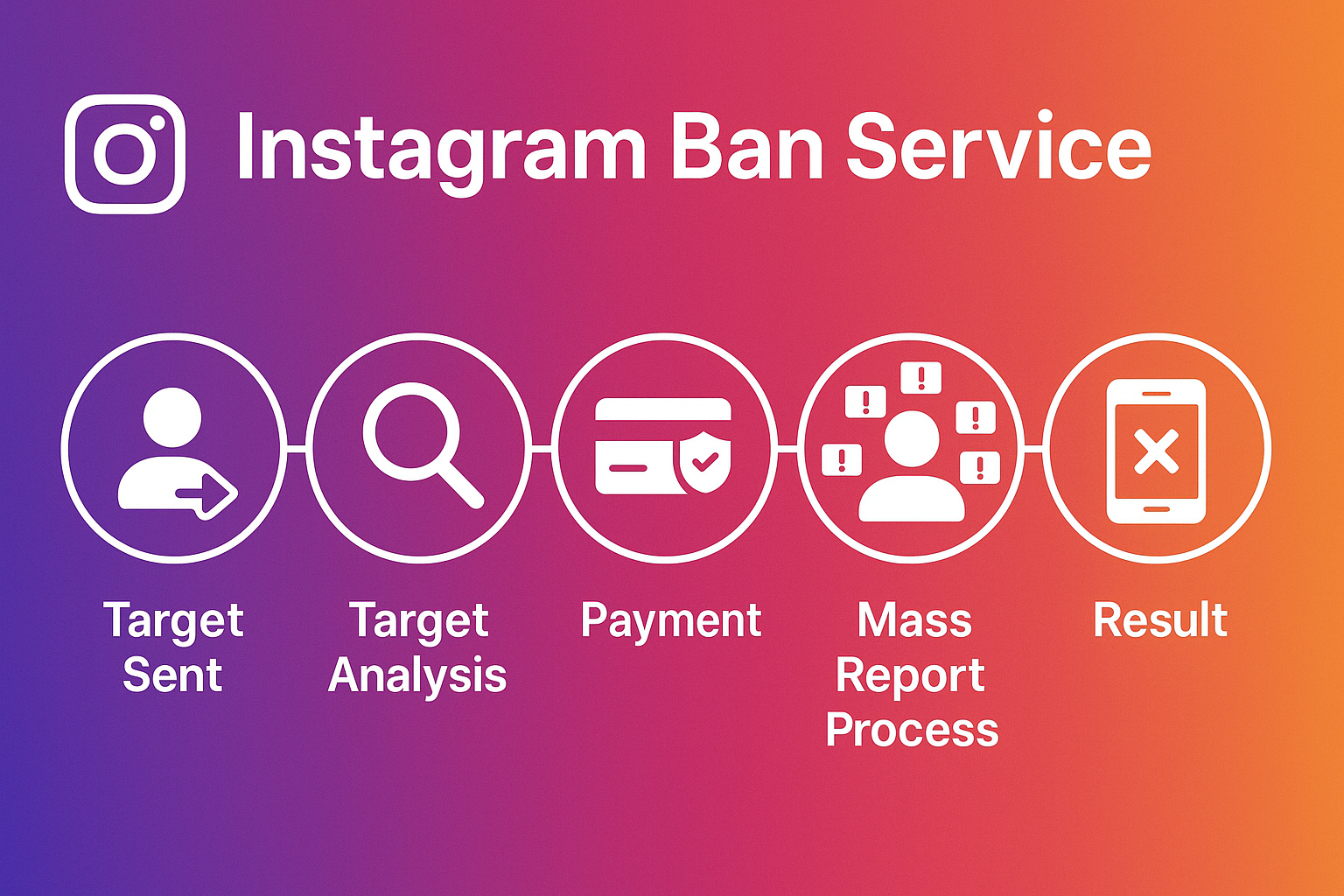
The pitch behind every "mass report" search is the same hope: that if enough people, or enough fake accounts, flag one profile at once, Instagram has to act. It feels obvious. It is also the exact assumption Instagram's own help pages are written to knock down. Below, the focus is on the part most pages skip — what actually happens to those reports once they land, why a tall stack of them carries no more weight than a single one, and the route that does get a rule-breaking account taken down.
Can you mass report an Instagram account into a ban?
No, not by sheer number. Instagram states it plainly: "The number of times something is reported doesn't determine whether or not it's removed from Instagram" — content comes down only when it breaks the Community Guidelines (Instagram Help Centre). So can you mass report an Instagram account and watch a ban drop out the bottom? Not on its own. Picture two scenarios. A thousand flags hit a profile that breaks no rule, and a reviewer finds nothing wrong a thousand times over. One flag hits a profile selling a phishing kit, and that single report can end it. The deciding factor was never the headcount. It was whether a rule was actually broken, which is why padding the count is effort spent in the wrong place entirely.
What does Instagram actually do with all those duplicate reports?
It collapses them into one review. A report is not a vote dropped in a ballot box; it is a request to check one piece of content against the rules. When fifty people, or fifty bot accounts, flag the same profile, Instagram's systems group those flags and assess the underlying content once — the answer to "does this break a guideline?" is yes or no regardless of how many times it was asked. Meta also actively looks for the pattern that mass reporting creates. As Facebook told AlgorithmWatch, the company has "invested significantly in technology to detect accounts that engage in coordinated or automated reporting." So a burst of identical complaints does not just fail to add weight; it can flag the reporters as the problem. The stack you built becomes a signal pointing back at you.
Then how does Instagram decide an account gets removed?
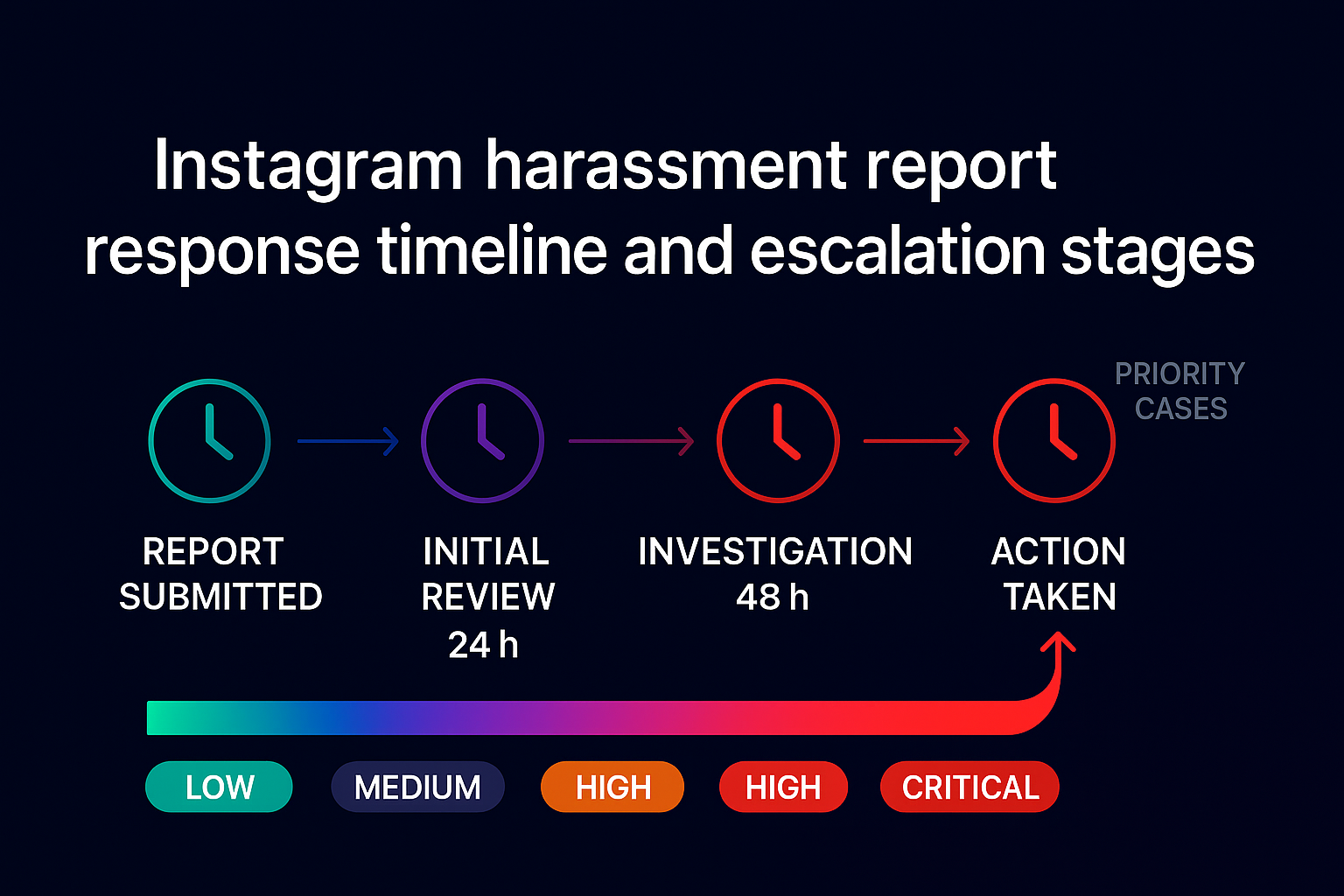
By severity and repetition of real breaches, climbed as a ladder rather than a tally. When a report is upheld, Instagram usually starts narrow and pulls the single offending post, reel, comment, or Story. Keep breaking rules and it escalates to feature limits — a temporary block on posting, commenting, or following — then to the account being disabled. Meta runs a strike system underneath all of it: "For most violations, if you continue to post content that goes against the Community Standards, despite repeated warnings and restrictions, Meta will disable your account," with removal triggered after a set number of strikes in a window (Meta Transparency Center). Severe categories — child safety, credible threats — skip the rungs and can disable a profile on the first confirmed breach. Notice what is missing from that whole chain: a report counter. Strikes come from confirmed violations, not from how loudly something was flagged. This is also the real reason a well-established profile shrugs off a brigade: Instagram weighs an account's own track record — its age, its genuine engagement, and its history of prior violations — as a reliability signal, so the account's clean record, not the report tally, is what protects it. A brand-new burner with a clear breach is far easier to action than a years-old account that has never been confirmed in violation. Meta's own enforcement transparency reflects this policy-driven approach rather than any crowd vote: it now publishes its Integrity (Community Standards Enforcement) figures on a semiannual cadence, starting with the H1 2026 report, aligned with the EU Digital Services Act (Meta Transparency Center, H1 2026).
| The mass-report myth | What actually happens |
|---|---|
| More reports force a faster ban | Duplicate flags are grouped into one review; the count adds no weight |
| There's a magic number of reports to hit | No threshold exists — a single confirmed breach can be enough, zero confirmed breaches never is |
| A free bot or panel reaches the review queue | Reports from throwaway accounts get filtered before a human sees them |
| Mass reporting is consequence-free for you | Coordinated false reporting is itself a violation that can get you actioned |
| Volume beats evidence | One report tied to a real, documented violation outperforms a thousand empty ones |
Which report reason gets Instagram to act fastest?
The category you choose changes how — and how fast — your report is handled, because different violations are assessed in different ways. Impersonation is the most clear-cut: a reviewer can line your evidence up against the real account and confirm the copy quickly, so these reports tend to be prioritised. Harassment and bullying are slower, since Instagram weighs the interaction history between the two accounts to judge whether genuine abuse is taking place. Scam or fraud reports trigger a search for financial-abuse patterns and can lead Instagram to restrict the target's DMs and ads, not just pull a post. The vague "spam" or generic "inappropriate" option is the broadest and slowest bucket, and on its own it frequently produces no action at all. The practical takeaway: name the specific rule the account breaks rather than reaching for the nearest catch-all label, because the precise category is what routes your report to the right review.
Is it better to report the whole account or a specific post?
Reporting a single offending post, Reel, Story, or comment is often more effective than flagging the whole profile, because it hands Instagram one concrete item to evaluate against a specific rule. A whole-account report asks a reviewer to judge a profile in the abstract; a granular report says "this exact piece of content breaks this exact guideline," which is far easier and faster to confirm. Where an account is breaking rules across several posts, the strongest move is to report each violating item individually so a documented pattern builds up, then report the account itself once if the offence is profile-level — an impersonating bio, a scam link in the handle. Pick the most clearly rule-breaking content as your anchor rather than diluting the report across borderline posts. One well-chosen, well-evidenced content report routinely outperforms a hundred vague flags aimed at the profile as a whole.
Is a GitHub or Telegram Instagram mass report bot worth trying?
No, and one can cost you your own profile. Search the code-hosting sites and a GitHub Instagram mass report bot turns up within minutes; open the messenger and Telegram channels sell the same promise by the dozen. Two faults sink every version. First, they file from disposable or automated accounts — exactly the inauthentic networks Meta's spam systems are built to catch and discard — so the reports are filtered out before reaching review. Meta estimates roughly 4% of its 3 billion-plus monthly users are fake and says it blocks millions of fake-account creation attempts every day, often within minutes of sign-up (Meta Transparency Center); a report fired from one of those throwaway profiles is discarded long before any reviewer sees it. Second, and worse, plenty of these scripts and bots ask you to log in or hand over a session token or 2FA code. AlgorithmWatch traced exactly where that leads, and the numbers are concrete: criminal groups run simple GitHub mass-reporting scripts to fire hundreds of false reports — sometimes tagging victims with fabricated "suicide or self-injury" categories to trigger fast suspension — then reclaim the locked account through Facebook's photo-ID system and resell it for roughly $20 to $200 on marketplaces such as SocialTradia. One Pakistani tool its investigators found listed about 400 targets across 40 countries (AlgorithmWatch). A reporting tool that wants your password is not a shortcut to a ban. It is the trap, and the account it threatens most is yours.
Should you pay for an Instagram mass report service?
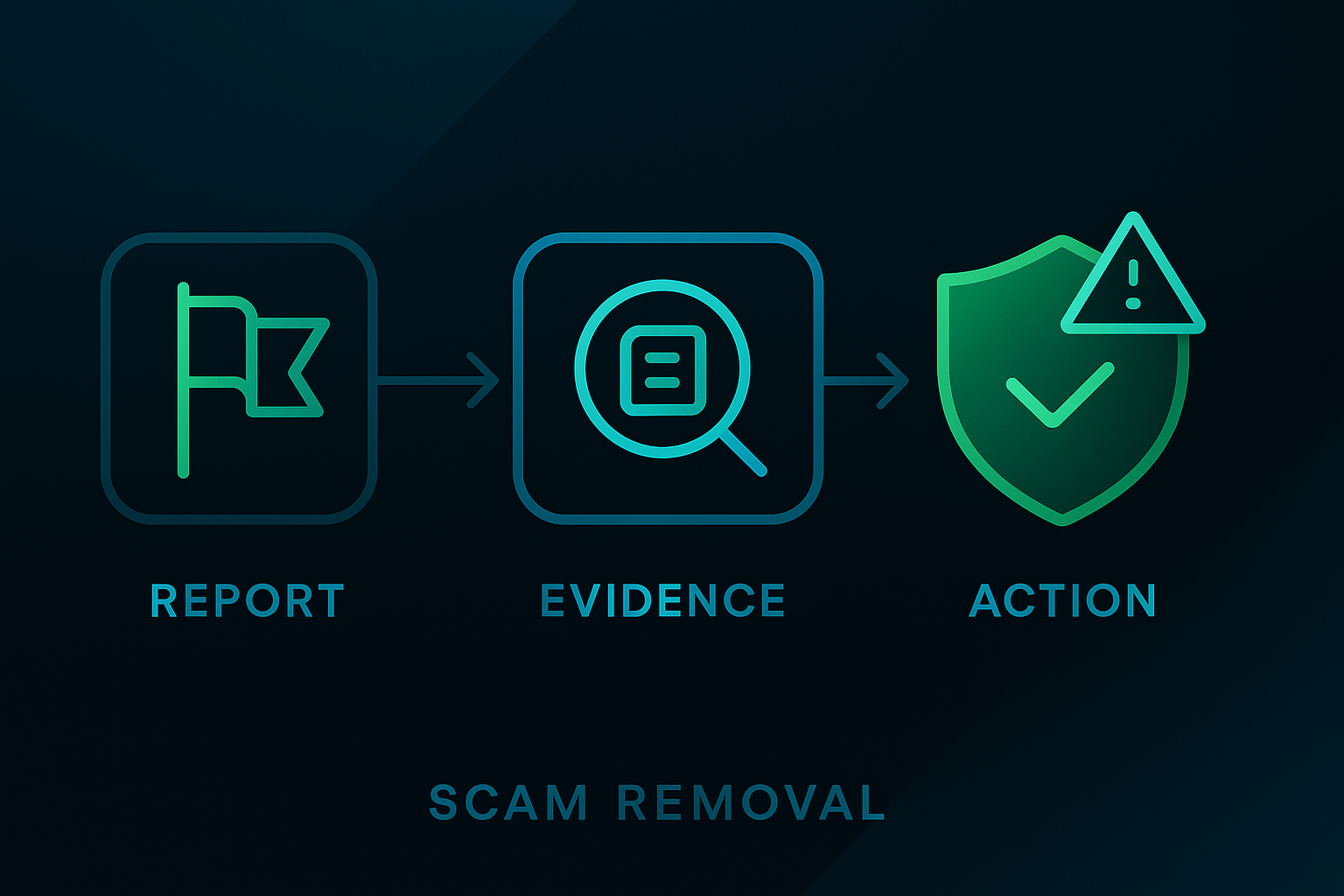
Be skeptical, because most of the offers are selling a number they cannot deliver. A cottage industry markets the "instagram mass report service" with confident figures — "92% success," "banned in 24 to 72 hours," even a cited "340% surge in AI-driven accounts" used to manufacture urgency — that no outsider can verify and no one outside Meta can actually promise. Pin those numbers down and they evaporate: a "92% success rate" has no published methodology, a "24–72 hour" ban window assumes an outcome only Meta's reviewers control, and the dramatic surge stat traces back to no primary source. No third party sits inside Instagram's review queue, so none can guarantee an enforcement decision; a vendor quoting precise odds is selling the appearance of certainty, not the thing itself. Before paying for a mass-report package, run the logic. Anyone guaranteeing a ban is either bluffing or quietly betting on a violation that was already heading for removal; the decision belongs to Instagram, and a vendor cannot override it. So when does paying for help make sense? Only when the account genuinely breaks the rules and the real labour is documenting the breach and routing it correctly. That is the honest version of a paid Instagram ban service: not a volume button, but evidence assembled into a case a reviewer can act on. One sells noise; the other does the work.
Can mass reporting someone backfire onto your own account?
Yes, and it is the risk the panels never mention. Turning the report system into a weapon against a profile you simply dislike is a breach in its own right — Meta classes coordinated, bad-faith reporting as inauthentic behaviour and acts against the accounts driving it (Meta's Inauthentic Behavior policy). So a brigade you organise to mass report an Instagram account can mark you as the abuser, with a feature limit, a strike, or a disabled profile waiting at the end. There is real-world exposure too, since an organised harassment campaign does not become lawful just because it runs through a Telegram channel. If someone is doing this to you instead, the fix is the opposite of panic — false reports get dismissed on review once a human checks the content, and you can see and appeal any action taken against you from your Account Status page in the app (Settings, then Account, then Account Status). If a brigade does get your account wrongly disabled, Instagram normally gives a 30-day window to request a review and reactivate it before deletion becomes permanent, so a coordinated false report is far more often a scare than a death sentence. The asymmetry is stark: you are likelier to lose your own account than to remove anyone else's.
How do you report an Instagram account the right way?
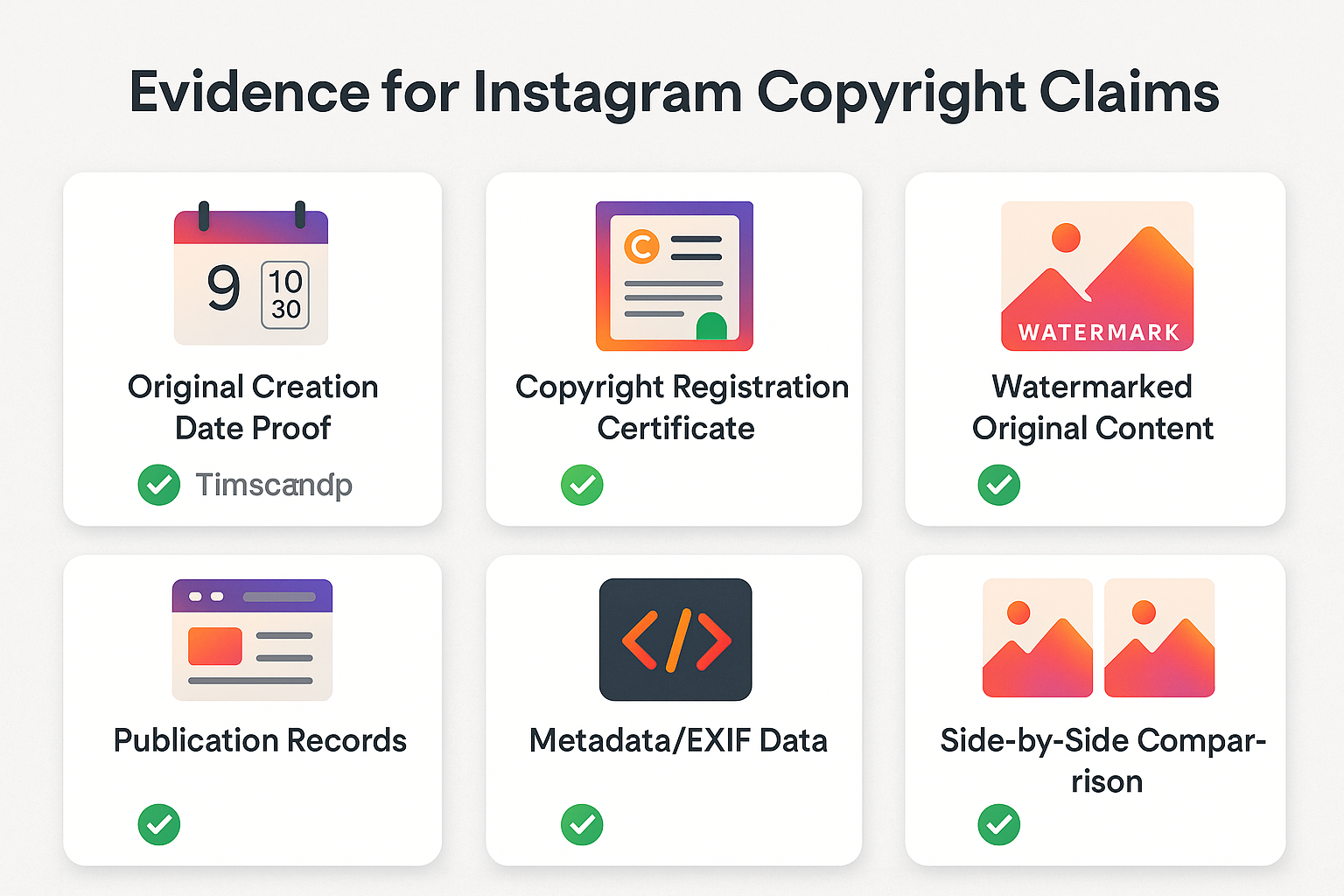
Build one well-evidenced report and file it through Instagram's own tools — there is no hidden bulk-report panel, just the report flow already on your phone. The honest answer to "how do I get this account taken down" is to document the breach, pick the exact violation, and submit once. This is the route that reaches a reviewer:
- Capture dated screenshots of the offending posts, Stories, or DMs first, because violating content is often deleted the moment an account senses a report coming.
- Open the profile or the specific post, tap the ••• (three dots), and choose Report.
- Pick the reason that genuinely fits — scam or fraud, hate or harassment, selling counterfeit goods — not the closest convenient label.
- For someone impersonating you, switch to Instagram's dedicated impersonation report form and attach a photo of your ID when prompted.
- Submit, then watch your notifications; Instagram confirms the report and tells you if it found a breach. Reporting stays anonymous — the account is never shown who flagged it.
None of this needs a bot, and the harm behind these profiles is not abstract: the FTC reported people lost $2.1 billion to scams that began on social media in 2025, roughly eight times the 2020 figure (FTC, April 2026). If you would rather not run the process yourself, our Instagram reporting service can map the profile to the exact guideline, build the evidence, and file it through the official route — the same standard we hold across every one of the violations we report. Where the case is really about removing a clone or a stolen identity, the formal account takedown routes and the steps for getting someone's profile deleted give you more leverage than any report stack. Not sure it crosses the line? Tell us about the profile and we'll say honestly whether it's worth filing.
Sources
- Instagram Help Centre — Abuse & Spam (the number of reports doesn't determine removal)
- Instagram — Community Guidelines
- Instagram — Report an impersonation account form
- Meta Transparency Center — Disabling accounts (strike system)
- Meta — Inauthentic Behavior policy (misuse of reporting tools)
- AlgorithmWatch — investigation into Facebook and Instagram mass-reporting
- FTC (April 2026) — reported losses to social-media scams
FAQ
Can you mass report an Instagram account into a ban?
Not by volume. Instagram states the number of times something is reported does not decide whether it comes down — only a genuine Community Guidelines breach does. A hundred reports against a rule-abiding profile change nothing, while one accurate report against a clear violation can be enough.
How many reports does it take to delete an Instagram account?
There is no number. Instagram judges the content, not the count, so the question has no fixed answer. A single confirmed violation in a severe category can disable an account, whereas thousands of flags against a rule-following profile delete nothing at all.
Is a GitHub or Telegram Instagram mass report bot safe to use?
No. These bots fire reports from throwaway accounts that Meta's systems filter out, and many demand your password or 2FA code, which simply hands your profile to a stranger. AlgorithmWatch documented attackers using mass-reporting to hijack and resell accounts.
Can mass reporting someone get my own account banned instead?
Yes. Meta treats abusing the reporting system to harass someone as a violation in itself. A coordinated false-report campaign tied to your profile can earn you a strike, a feature limit, or a disabled account, and organised harassment can carry legal exposure too.
What does Instagram do with duplicate reports about the same profile?
It groups and de-duplicates them. Reports flag content for one review against the Community Guidelines; reporting the same profile fifty times still produces one assessment of whether a rule was broken. Repeating a flag adds no weight to that single decision.
What should I do if someone is mass reporting me?
Stay calm — false reports are dismissed once a reviewer checks the content, and report counts don't disable a rule-abiding account. Check your Account Status page to see and appeal any action taken, and a wrongly disabled account can usually be reactivated within Instagram's 30-day review window.
Does reporting a specific post work better than reporting the whole account?
Often, yes. A report on one offending post, Reel, Story, or comment gives Instagram a concrete item to judge against a specific rule, which is easier and faster to confirm than assessing a whole profile in the abstract. Report each violating item, then the account itself if the breach is profile-level.